Obuda University is one of Hungary’s leading institutions of higher education in engineering, information technology, applied sciences, and innovation. Located in Budapest, the capital of Hungary, the university has a strong tradition of technical education dating back more than 140 years through its predecessor institutions. Established in its current form in 2010, Óbuda University has rapidly developed into a modern, internationally recognized university committed to excellence in education, research, and industrial collaboration.
The university offers a broad range of undergraduate, graduate, and doctoral programs in engineering, computer science, business, natural sciences, and related disciplines. With a strong emphasis on practical knowledge and innovation, Óbuda University prepares students to meet the challenges of an increasingly digital and interconnected world. Its educational philosophy combines theoretical foundations with hands-on experience, ensuring that graduates possess both academic knowledge and practical skills highly valued by employers worldwide.
Research and innovation are central pillars of the university’s mission. Óbuda University hosts numerous research centers and laboratories dedicated to cutting- edge fields such as artificial intelligence, robotics, cyber- physical systems, intelligent manufacturing, data science, healthcare technologies, and smart city solutions. Researchers and faculty members actively participate in national and international projects, collaborating with academic institutions, industrial partners, and governmental organizations across Europe and beyond. The university’s growing scientific output and international visibility have established it as a significant contributor to technological advancement and knowledge creation.
Internationalization plays an important role in the university’s development strategy. Through participation in European and global academic networks, exchange programs, and collaborative research initiatives, Óbuda University maintains partnerships with hundreds of institutions around the world. Each year, the university welcomes a diverse community of international students, researchers, and visiting scholars, creating a multicultural academic environment that encourages the exchange of ideas and perspectives.
The university is particularly well known for its achievements in computer science, engineering education, and digital transformation. Faculty members are actively involved in advancing innovative teaching methodologies and developing technologies that support learning, research, and industrial applications. This strong connection between education, technology, and innovation makes Óbuda University an ideal host for international conferences focusing on computer science, artificial intelligence, engineering, and educational technologies.
The main conference venue for IEEE ICCSE 2026 is located at the university’s modern campus on Bécsi Road in Budapest. The campus offers state-of-the-art lecture halls, conference facilities, collaborative spaces, and technological infrastructure designed to support high-level academic events. Its location in the historic Óbuda district provides participants with convenient access to Budapest’s public transportation network, cultural attractions, and vibrant urban life.
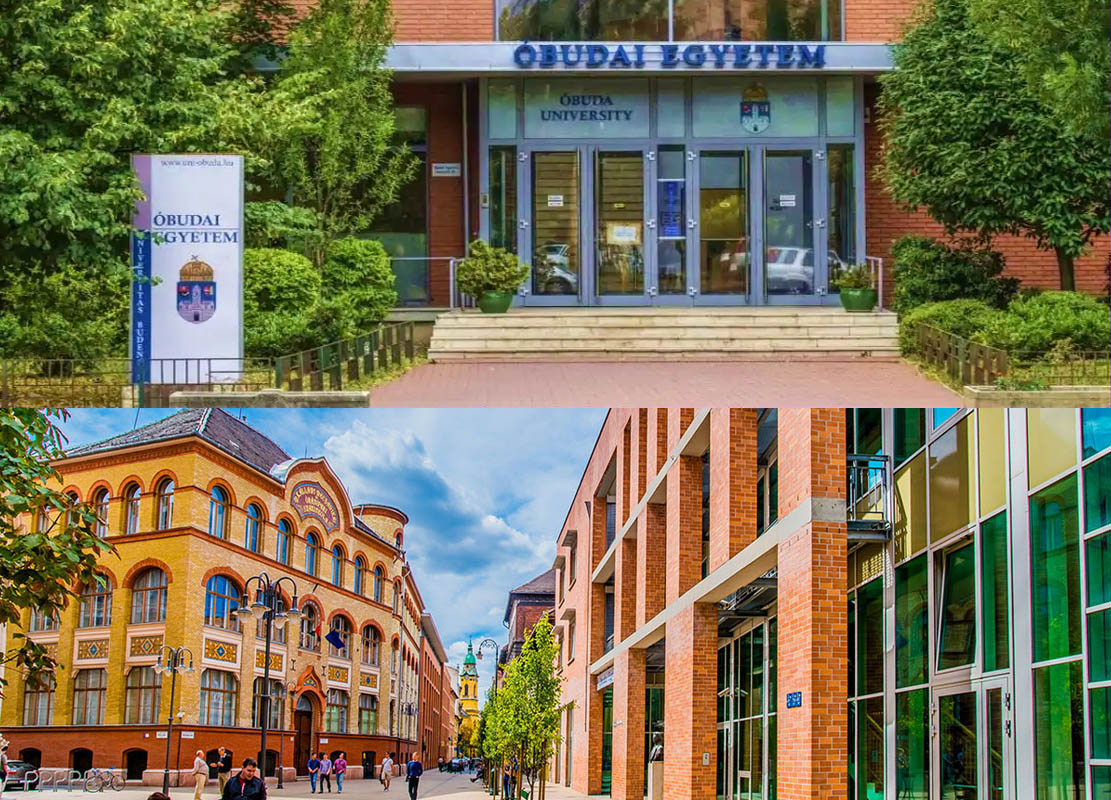
Obuda University will serve as the main venue for IEEE ICCSE 2026. Located in Budapest, Hungary, the university is one of the country’s leading institutions in engineering, information technology, and applied sciences. With its strong focus on innovation, digital technologies, and international collaboration, Obuda University provides an ideal environment for a conference dedicated to the future of computer science and education. The campus offers modern facilities for academic exchange and networking, while its location provides convenient access to Budapest’s rich cultural heritage, historic landmarks, and vibrant city life. Participants will enjoy both a world-class conference experience and the unique atmosphere of one of Europe’s most beautiful capitals.
Address: H-1034 Budapest, Bécsi út 96/B
Contact: +36 (1) 666-5603 (toll fee)
Email: rajnai.zoltan@uni-obuda.hu, kallos.noemi@uni-obuda.hu
Website: https://uni-obuda.hu/en/
Participants arriving at Budapest Ferenc Liszt International Airport can conveniently reach the ICCSE 2026 venue at Óbuda University (H-1034 Budapest, Bécsi út 96/B) using Budapest’s efficient public transportation network.
Take the 100E Airport Express bus from the airport to Deák Ferenc tér, the city’s main transportation hub. From there, take Metro Line M2 to Batthyány tér and transfer to Tram 17, which stops near Obuda University. This route provides a fast and comfortable connection from the airport to the conference venue.
Take the 100E Airport Express bus to Deák Ferenc tér, then travel by Metro Line M2 to Batthyány tér. From Batthyány tér, take the H5 suburban railway (HÉV) towards Szentendre and continue to the relevant Óbuda stop. The university can then be reached by a short walk or local bus connection.
As a budget-friendly alternative, take bus 200E from the airport to Kőbánya-Kispest, then continue by Metro Line M3 toward the city center. Depending on your accommodation location, transfer to Metro Line M2, trams, or buses serving the Óbuda district and Bécsi út area.
Budapest offers an integrated public transportation system including metro lines, trams, buses, and suburban railway services, making it easy for conference participants to travel between the airport, hotels, the city center, and the conference venue.
