XIONG Ke, School of Computer Science and Technology, Beijing Jiaotong University, China (kxiong@bjtu.edu.cn)
TAO Dan, School of Electronic and Information Engineering, Beijing Jiaotong University, China (dtao@bjtu.edu.cn)
ZHOU Wei, School of Computer Science and Technology, Beijing Jiaotong University, China (wzhou@bjtu.edu.cn)
In order to respond to the demand for versatile and innovative talents in computer science, we focus on the deep integration of AI and digital technology in the entire process of talent cultivation, summarizing the practical achievements in innovation of talent cultivation methods, application of core technologies, and development of high-quality resources, building a high-quality computer science education system. In the invited session, we call for excellent academic papers and practical research results worldwide, focusing on the key areas of talent cultivation (including computer science and technology, software engineering, artificial intelligence, network engineering, data science, and big data technology, etc.), which are empowered by AI and digitalization. The session covers three core directions: method innovation, technology application, and resource development.
Topics include but are not limited to:
● Reconstruction of the computer science talent cultivation system, exploration and practice of the "AI+X" composite talent cultivation path;
● The innovation of "student-centered" teaching mode, including the design and implementation of personalized learning, inquiry-based learning, project-based learning, blended learning, and other modes;
● Innovative applications of large language models, generative AI, and multimodal in computer-related course teaching (such as code generation, case design, tutoring and answering questions, paper polishing, etc.);
● The application practice and effect analysis of tools such as intelligent teaching assistants, virtual teachers, and intelligent evaluation systems in the entire teaching process (lesson preparation, teaching, homework correction, assessment and evaluation);
● Development of core computer course (group) resources empowered by AI, including three-dimensional textbooks, online courses, virtual simulation resources, case libraries, question banks, etc.;
● The digital upgrading and sharing path of first-class courses and high-quality teaching resources under the "101 Plan" background, as well as the collaborative construction mechanism of cross-school and cross-regional teaching resources;
● The construction of computer-related faculty teams, including methods and paths for enhancing teachers' digital literacy and training in AI teaching capabilities;
● Innovation in industry-education integration and school-enterprise collaborative education mechanisms, such as the construction and practice of industry colleges, AI joint laboratories, and internship and training bases;
● Development and localization practice of computer talent training resources oriented towards regional characteristics and industry needs (such as smart manufacturing, intelligent transportation, medical health, etc.).
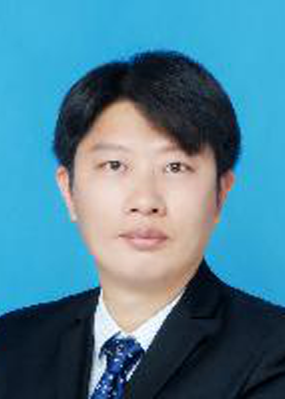
Prof. XIONG Ke is associate dean of Computer Science and Technology, Beijing Jiaotong University.
His main research interests focus on the intersection of artificial intelligence, digital education, network intelligence and mobile computing, low-altitude navigation safety assurance, intelligent perception and embodied AI. He was selected as a Highly Cited Chinese Researcher by Elsevier in 2023 and 2024, and listed among the World's Top 2% Scientists by Stanford University in 2022, 2023, and 2024.
See more: https://faculty.bjtu.edu.cn/8584
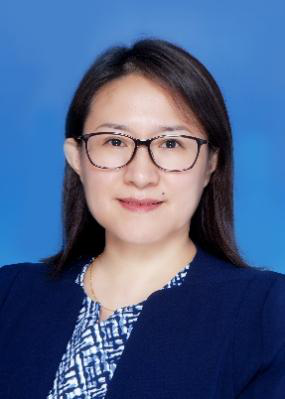
Prof. TAO Dan is associate dean of School of Electronic and Information Engineering, Beijing Jiaotong University.She received her Ph.D. degree from Beijing University of Posts and Telecommunications.
Her main research interests focus on the intersection of artificial intelligence, digital education, communication engineering, signal processing and electronic systems, low-altitude intelligent communication and networking technology. She was awarded the Beijing "Pioneer in Teaching and Educating" (2023), Baosteel Excellent Teacher Award (2025) etc.
See more: https://faculty.bjtu.edu.cn/8036/

Prof. ZHOU Wei is senior researcher from School of Computer Science and Technology, Beijing Jiaotong University. She received the Ph.D. degree from Nagoya University (Japan).
With main research interests in Data Science, AI, System Engineer, Education Technology, Information Services, she has published many papers of international conference and journals, and served on some editorial boards. She received the Third Batch of National First-Class Undergraduate Courses (2025), and the "Outstanding Teacher Award" from the National Association of Computer-Based Education in Higher Education Institutions (2025), etc.
See more: http://faculty.bjtu.edu.cn/8405/
WENG Yu, School of Information Engineering, Minzu University of China, China. (wengyu@muc.edu.cn)
KEBAITULI Gulibanumu, School of Foreign Studies, , Minzu University of China, China. (banumu@muc.edu.cn)
XU Guixian, School of Information Engineering, Minzu University of China, China. (guixian_xu@muc.edu.cn)
Marginalized communities, such as remote areas, low-income regions and ethnic minority-inhabited areas, are frequently plagued by educational inequities including inadequate high-quality educational resources, shortage of professional teachers, and uneven educational development. With the rapid advancement of artificial intelligence (AI) technology, it has become a critical opportunity to bridge the educational gap and promote educational equity by leveraging digital means. AI not only innovates the forms of educational service delivery but also provides new solutions for optimizing resource allocation and realizing personalized learning in resource-constrained contexts.
This special session aims to bring together researchers, educators, policymakers, and industry practitioners worldwide to explore the construction path, application strategy and implementation effect of AI-enhanced digital safeguard systems for education in marginalized communities. The core focus is to discuss how to use AI technology to build a multi-dimensional digital support system that covers equitable resource distribution, teacher capacity empowerment, and personalized learning support, thereby breaking through the bottlenecks of traditional education in marginalized communities. This session is expected to provide theoretical support and practical guidance for promoting educational equity in marginalized areas, and contribute to the realization of the United Nations Sustainable Development Goal 4 (Quality Education for All).
Topics include but are not limited to:
● AI-driven equitable distribution and intelligent allocation of educational resources in marginalized communities;
● Development of lightweight AI educational tools adapted to resource-constrained environments;
● AI-enabled personalized learning support for students in marginalized communities;
● AI-assisted teacher professional development systems for marginalized areas;
● Ethical norms and data privacy protection in AI-enhanced educational practices in marginalized communities;
● Localized adaptation of AI educational technologies;
● Integrating AI Ethics and Value-Oriented Learning in Computer Science Curricula
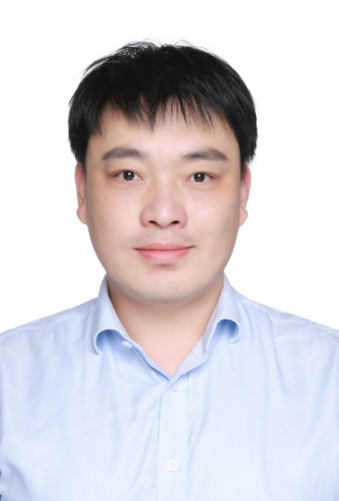
Prof. WENG is Dean of the School of Information Engineering, Minzu University of China. He received his Ph.D. degree in Computer Science and Technology from University of Science and Technology Beijing. His main research interests focus on the intersection of artificial intelligence, digital education, and educational equity, with a particular emphasis on digital education development.
He has presided over multiple national and provincial-level scientific research projects, published numerous high-quality academic papers in international conferences and journals in the field of educational technology and AI application, and served as a reviewer for several authoritative international journals and conferences. He has rich experience in promoting the integration of digital technology and education in marginalized communities, providing important technical and theoretical support for improving educational equity in these areas.
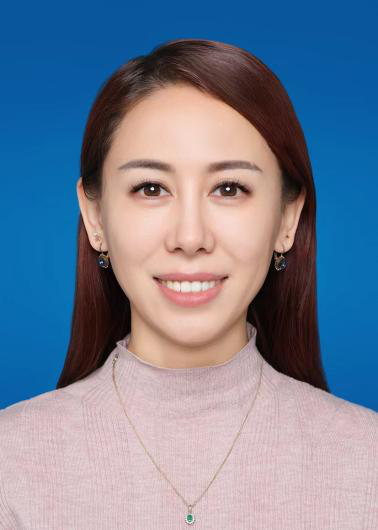
KEBAITULI Gulibanumu, PhD, an Associate Professor, Master’s Supervisor, and the Vice-Dean of the School of Foreign Studies at Minzu University of China. Concurrently serves as the Vice-Dean of the Institute of Area Studies and the Vice-Dean of the Institute of Central Asian Studies at the same university.
The director of a National First-Class Undergraduate Course and has been honored as a “Model Young Teacher” by the State Ethnic Affairs Commission. Dr. KEBAITULI is also a member of the Expert Committee for Reviewing Major Translation Projects, jointly established by the China International Communications Group (CICG) and the Translators Association of China (TAC).
Her primary research interests include Uzbek linguistics, translation studies, and the society and culture of Central Asia. She has authored 2 academic monographs, published 10 academic translations, and reviewed and finalized the official Uzbek translations of 4 major national works. Additionally, she has published 2 textbooks and translated 14 textbooks and reference tools for teaching Chinese as a foreign language. Dr. KEBAITULI has published over 20 academic papers in domestic and international journals.
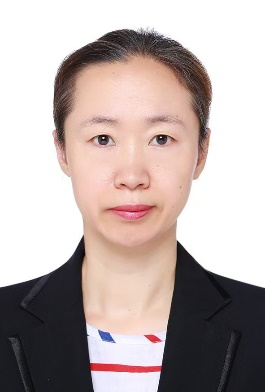
Prof. XU Guixian is a Professor and Doctoral Supervisor at Minzu University of China. She holds a Ph.D. in Computer Software and Theory from Beijing Institute of Technology and was a visiting scholar at Georgetown University and the Mayo Clinic in the United States.
Her main research interests lie at the intersection of Artificial Intelligence, Data Mining, and Natural Language Processing, with a specific focus on Web Text Mining and Social Network Public Opinion Analysis. A significant portion of her research is dedicated to the intelligent information processing, applying big data and deep learning techniques to areas like sentiment analysis, and knowledge management. Prof. XU's work exemplifies the application of cutting-edge computational technologies to address culturally significant challenges, providing important technical support for information processing and public opinion governance.
LUO Juan, Hunan University, China (juanluo@hnu.edu.cn)
ZHAO Huan, Hunan University, China (hzhao@hnu.edu.cn)
CAI Yuhui, Hunan University, China (rj_cyh@hnu.edu.cn)
In 2026, as Artificial Intelligence evolves comprehensively from "generative tools" to "Agents" capable of autonomous planning and execution, global education is undergoing a profound transformation from "single-skill transmission" to "comprehensive literacy reshaping." This session aligns with the latest trends in talent development for the intelligent era, focusing on breaking traditional disciplinary barriers and reconstructing an AI general education system oriented toward the future. It aims to explore how to redefine core competencies for non-technical professionals in a context where Agents are widely involved, how to achieve the "boundary-breaking" and "reconstruction" of knowledge systems through interdisciplinary curriculum design, and how to leverage multimodal AI to empower the entire teaching process. The goal is to cultivate composite talents equipped with computational thinking, ethical awareness, and cross-boundary innovation capabilities.
Topics include but are not limited to:
● Reconstructing the Goals of AI General Education: A Paradigm Shift from Skills to Literacy
● "Boundary-Breaking" and "Reconstruction" in Interdisciplinary Curriculum Design
● Interdisciplinary AI Empowering the Entire Teaching Process
● Interdisciplinary Innovation Practice Platforms Based on Agents
● Ethical Decision-Making and Responsibility Education in a Human-Machine Symbiotic Environment
● Future-Oriented Interdisciplinary Faculty Development and Evaluation Systems
This session is dedicated to gathering global educational researchers and practitioners to jointly draw a new blueprint for interdisciplinary integration. It aims to propel AI general education from theoretical conception to systematic implementation, providing solid support for cultivating innovative talents capable of mastering intelligent technologies and leading future development.

LUO Juan, Ph.D, professor, doctor supervisor. She graduated from National University of Defense Technology with a bachelor’s degree and achieve master degree and Ph.D from Wuhan University . She used to work in the Fiberhome Networks company of Wuhan Academy of Posts and Technology, and is a visiting scholar at the University of California, Irvine. She was selected as a new century outstanding talent by the Ministry of Education, and won the Hunan Province Outstanding Youth Fund, the Hunan Province's young backbone teachers. Her current research interests include IoT, cloud computing and artificial intelligence.
See more: http://csee.hnu.edu.cn/people/luojuan

ZHAO Huan, Ph.D., Professor, doctor supervisor, associate dean, College of Computer science and Electronic Engineering. She is visiting scholar at the University of California, San Diego, the member of the Computer Basic Teaching Steering Committee of the Ministry of Education, and the member of the Steering Committee of the Education and Training of Industrial and Information Talents. She won the second prize of National Teaching Achievement Award, the Outstanding prize of BAOGANG distinction teacher and Huo Yingdong Education Foundation Education and Teaching Award.
Her research interests include embedded computer systems and speech information processing.
See more: http://csee.hnu.edu.cn/people/zhaohuan

CAI Yuhui is an associate professor at the College of Computer Science and Electronic Engineering in Hunan University whose research interests include computer networks, image processing, and artificial intelligence. He won the second prize of the Chinese University Science and Technology Award. And he was employed by the Ministry of Education of PRC in 2023 as a member of the course construction team for Computer Science Undergraduate Education and Teaching pilot reform program.
See more: http://csee.hnu.edu.cn/people/caiyuhui
XIONG Yu, Chongqing University of Posts and Telecommunications (CQUPT), China.(xiongyu@cqupt.edu.cn)
Attila Pandur, University of Pécs, Hungary (attila.pandur@etk.pte.hu)
With breakthroughs in AI-generated content technology and enhanced multimodal interaction capabilities, educational AI agents are evolving from single-function tools into multifaceted educational partners equipped with perception, decision-making, interaction, and evolutionary capabilities. This transformation provides key technological support for building a new ecosystem of human-machine collaborative education. How to scientifically construct agents tailored for different educational scenarios, how to achieve effective collaboration between agents and learners, and how to evaluate the application effects of agents in educational practice have become cutting-edge issues in the field of intelligent education. This invited session aims to provide a platform for researchers, developers, and educational practitioners in the field of educational agents to engage in in-depth dialogue, exploring design paradigms, core technologies, application scenarios, and evaluation systems for educational agents.
Topics of interest include, but are not limited to:
● Design of Subject-Specific Educational Agents for Disciplinary Instruction
● Explainability Mechanisms and Transparent Decision-Making in Educational Agents
● Automatic Generation of Multimodal Educational Content Driven by Educational Agents
● Personalized Learning Path Recommendation and Adaptive Agents
● Learning Process Analysis and Diagnosis in Human-Machine Collaborative Scenarios
● Design and Application of Evaluation Agents
● Enhanced Intelligent Tutoring Systems and Virtual Teachers
● Trustworthy Mechanisms, Ethical Standards, and Privacy Protection in Educational Agents
● Multi-Agent Collaborative Systems in Classroom Teaching Applications
● Empirical Research and Effectiveness Evaluation of Educational Agents

XIONG Yu is now the professor and doctoral supervisor at Chongqing University of Posts and Telecommunications (CQUPT), and the director of Research Center for Artificial Intelligence and Smart Education at CQUPT. He is also currently Executive Director of Chongqing Research Center for Educational Big Data and Director of Chongqing Key Laboratory of Hybrid Enhanced Intelligent Education in Universities. He also serves as the Vice Chairman of Technical Committee on Smart Education of the Chinese Association of Automation, the Member of the Intelligent Education Committee, Chinese Association of Educational Technology, Secretary-General of the Steering Committee for Education Digitalization and Teaching Method Innovation in Chongqing Higher Education Institutions. He has published more than 100 academic papers, and won 3 first prizes of provincial and ministerial-level scientific and technological achievements, as well as 2 first prizes of teaching achievements. His research interests include artificial intelligence and smart education, pattern recognition and machine learning, and educational data mining.

Attila Pandur is a senior lecturer and Head of the Department of Oxyology and Emergency Care at the Faculty of Health Sciences, University of Pécs. He also serves as Director of the Human Patient Simulation Center, where he leads research, development, and innovation activities in simulation-based education and digital health technologies.
He is actively involved in national and international professional networks, including membership in the Prehospital Section of European Society for Emergency Medicine and the Thromboxyology Working Group. He also contributes as an instructor within the Hungarian National Ambulance Service and participates in international academic mobility programs.
Dr. Pandur has extensive experience in healthcare education, emergency medicine, and simulation-based training. His research focuses on emergency care pathways, with particular emphasis on the differential diagnosis of acute coronary syndrome and pulmonary embolism, as well as emerging areas such as artificial intelligence in healthcare education, smart wearable technologies, and data-driven competency assessment.
He has contributed to multiple educational and innovation projects, including the development of smart textile-based physiological monitoring systems and the integration of simulation methodologies into competency-based medical education. His work bridges clinical practice, education, and technological innovation, with a strong emphasis on improving decision-making and performance in high-stakes medical environments.
He has published scientific work in his field and actively participates in the development of modern, digitally supported healthcare education systems.
Li Shanshan, Tsinghua University(THU), China.(lishanshan@tsinghua.edu.cn)
Fan Xuesong, Peking University(PKU),China.(fan@pku.edu.cn)
In the process of cultivating students, experimental teaching is an indispensable part, playing a key role in training students' comprehensive abilities in all aspects, especially their hands-on practical skills. In the training of computer professionals, the development of new technology has extended the way for students to acquire knowledge to the whole Internet. The introduction of artificial intelligence is profoundly reshaping the talent training mode of computer professionals, especially in practical education. Artificial intelligence has a huge impact on traditional experimental teaching in terms of experimental content, experimental mode, evaluation methods, etc. We need to explore and try from many aspects to reconstruct the traditional computer experimental teaching method mode to meet the needs of the intelligent era. The purpose of this invited conference is to provide a platform for researchers, developers, and educators related to computer experimental teaching to engage in in-depth dialogue, explore new technologies, methods, and models in practical teaching, and enhance the effectiveness of experimental teaching.
Topics for cultivating students' computational and mathematical thinking are included but not limited to:
● Theory related to practical education and its implementation in the field of computer science;
● Construction of Computer Experimental Teaching System and Design of Experimental Cases;
● Construction of Computer Teaching Experiment System Empowered by Artificial Intelligence;
● Construction of Teaching and Experimental System for Computer Talent Training in the Context of Future Technologies;
● Computer Practice Education under the Background of Artificial Intelligence Big Model;
● Construction and Resource Sharing of Computer Virtual Simulation Experiment Platform;
● Scientific and effective evaluation system and monitoring mechanism for practical teaching;
● Research and Practice on Complex Engineering Problems in Computer and Application Systems;
● Innovation in Computer Experimental Technology and Development of Experimental Equipment;
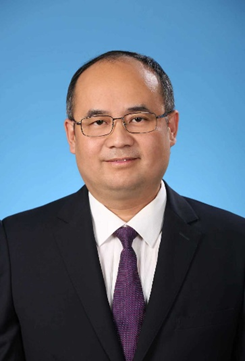
Li Shanshan is now the senior engineer of the Department of Computer Science & Technology at Tsinghua University. His main research areas include computer system architecture and computer education.
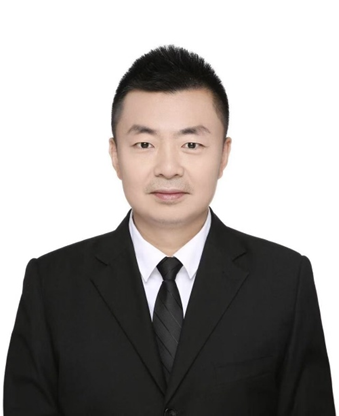
Fan Xuesong is a Senior Engineer at the Computer Center of Peking University. His research interests on computer education and the experimental teaching of artificial intelligence.